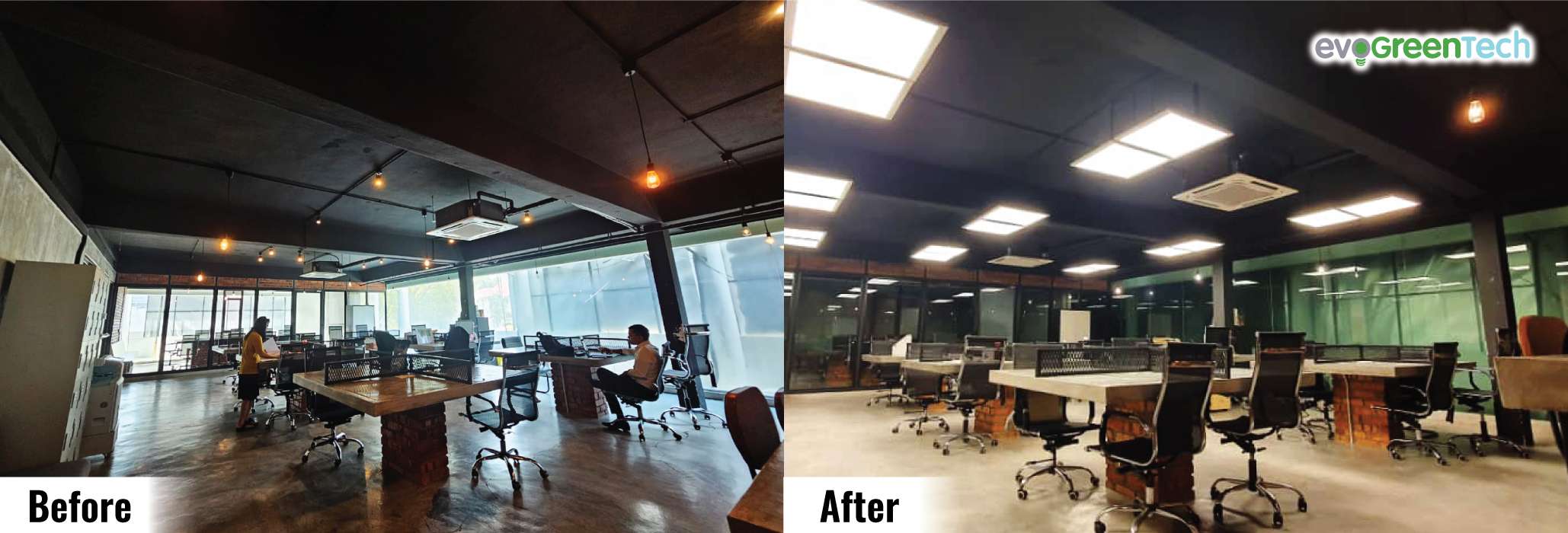
Improved Productivity with Sustainable Office Lighting
Office Lighting Definition
Office lighting refers to the strategic design and implementation of artificial and natural lighting systems in workplaces to provide adequate illumination, improve productivity, reduce eye strain, and enhance employee well-being.
Effective lighting design considers brightness levels, color temperature, glare control, and the integration of natural daylight to create comfortable and productive work environments.
Quick Answer: What Is the Ideal Office Lighting Level?
The recommended office lighting level is 300–500 lux for general workspace tasks. Higher illumination levels (500–750 lux) may be required for detailed work such as design, drafting, or technical tasks.
Proper lighting improves visual comfort, reduces eye strain, and enhances employee productivity.
In Malaysia, most commercial office lighting projects follow international lighting guidelines recommending 300–500 lux illumination for workspace productivity and visual comfort.
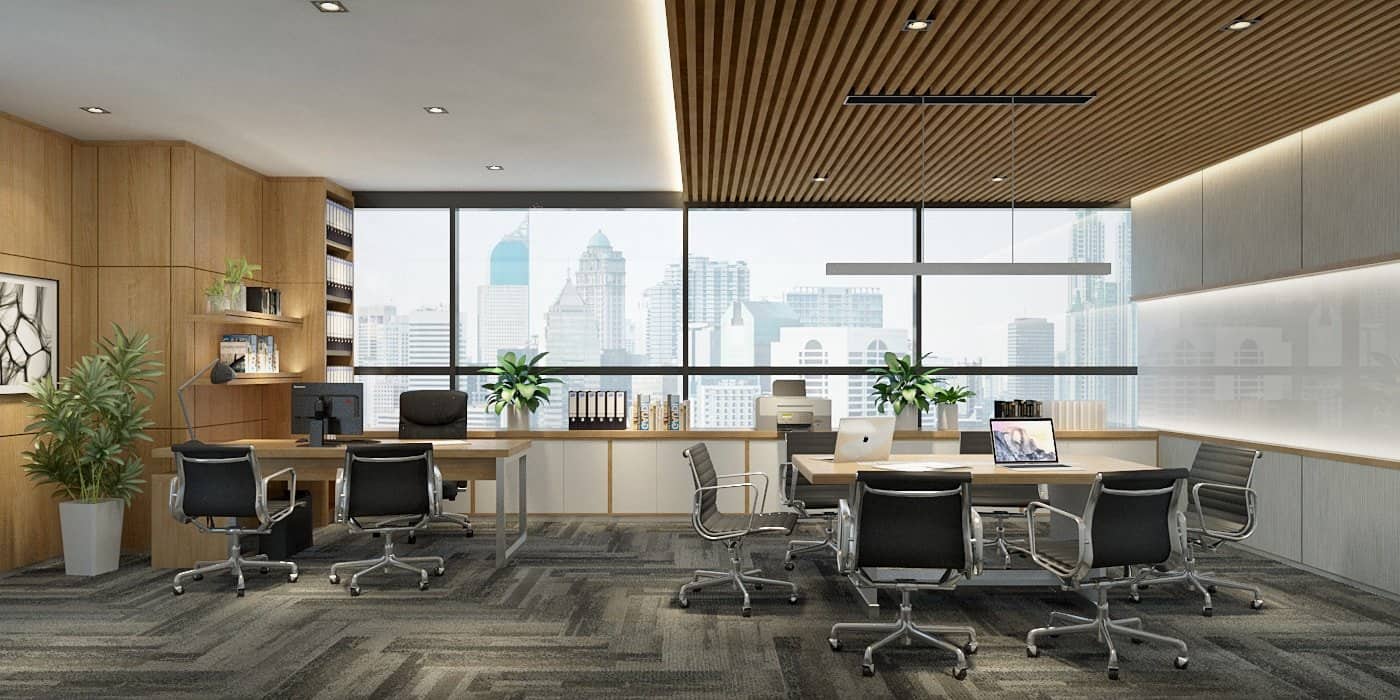
Key Takeaways: Office Lighting Best Practices
• Recommended lighting level for offices: 300–500 lux
• Detailed work areas may require 500–750 lux
• LED lighting systems improve energy efficiency and lifespan
• Proper lighting design improves productivity and visual comfort
• Combining natural and artificial lighting creates healthier workspaces
Why Office Lighting Is Important for Workplace Productivity?
Office lighting is often overlooked when designing a workspace. Many assume that as long as there is sufficient brightness, it is adequate. However, lighting should not only serve aesthetic purposes, it must provide proper illumination to support daily tasks.
Research shows that lighting directly impacts:
• Employee productivity
• Concentration and cognitive performance
• Mood and workplace satisfaction
• Visual comfort and eye health
Poor lighting conditions can cause:
• Eyestrain
• Headaches
• Fatigue
• Reduced focus and efficiency
In contrast, well-designed lighting improves alertness, enhances mood, and creates a more comfortable and productive work environment.
Key Factors to Consider When Choosing Office Lighting
Selecting the right office lighting requires a combination of technical planning and human-centered design considerations. Below are the most important factors when planning workplace lighting systems.
1. Energy efficiency
Choose energy-efficient lighting solutions such as LED lighting systems.
Benefits of LED lighting include:
• Lower electricity consumption
• Longer operational lifespan
• Reduced maintenance costs
• Lower carbon footprint
Energy-efficient lighting supports sustainability goals while helping businesses reduce long-term operational expenses.
2. Color Temperature (Kelvin Rating)
Color temperature influences employee mood, alertness, and task performance.
| Lighting Type | Kelvin Range | Best For |
|---|---|---|
| Warm White | 2700K–3500K | Lounge areas, meeting rooms |
| Neutral White | 3500K–4500K | General office use |
| Cool White | 5000K–6500K | Focused task work |
Cooler temperatures can improve concentration and alertness, while warmer tones help create a relaxed and collaborative atmosphere.
3. Brightness Level (Lux)
Lighting should provide sufficient illumination without creating glare or excessive contrast.
| Workspace Type | Recommended Lux Level |
|---|---|
| General office work | 300–500 lux |
| Meeting rooms | 300 lux |
| Detailed design work | 500–750 lux |
| Reception areas | 200–300 lux |
Maintaining proper brightness levels helps reduce visual fatigue and improves workplace productivity.
4. Lighting Placement and Seating Arrangement
When planning lighting:
• Position fixtures to reduce screen glare
• Avoid harsh overhead shadows
• Ensure each workstation has sufficient task lighting
• Align lighting with desk orientation
Poor placement can cause reflection on computer screens and eye discomfort.

5. Lighting Controls and Adjustability
Modern workplaces benefit from adaptive lighting systems such as:
• Dimmers
• Smart lighting controls
• Adjustable fixtures
• Motion sensors
Lighting control allows employees to adjust brightness based on task requirements, personal comfort, and time of day, improving satisfaction and productivity.
6. Integration of Natural and Artificial Lighting
Maximizing natural daylight helps create a healthier and more energy-efficient workspace.
Benefits of natural lighting include:
• Supporting circadian rhythms
• Improving mood and well-being
• Reducing electricity usage
Workstations should be positioned near windows where possible, while artificial lighting ensures consistent brightness throughout the workspace.
7. Lighting Design and Fixture Selection
Lighting fixtures should support both functionality and workspace aesthetics.
When selecting lighting fixtures:
• Choose designs that distribute light evenly
• Avoid hotspots and dark zones
• Ensure consistent illumination across work areas
A well-designed lighting system enhances visual comfort while maintaining a professional office environment.

Commercial Office Lighting Solutions in Malaysia
Businesses in Malaysia are increasingly adopting energy-efficient LED lighting systems to improve workplace productivity while reducing energy consumption.
Modern commercial office lighting solutions focus on:
• energy-efficient LED panel lights
• balanced brightness and glare control
• appropriate color temperature for productivity
• smart lighting systems with motion sensors
Businesses planning to upgrade their workspace can explore modern LED commercial lighting solutions designed for offices.
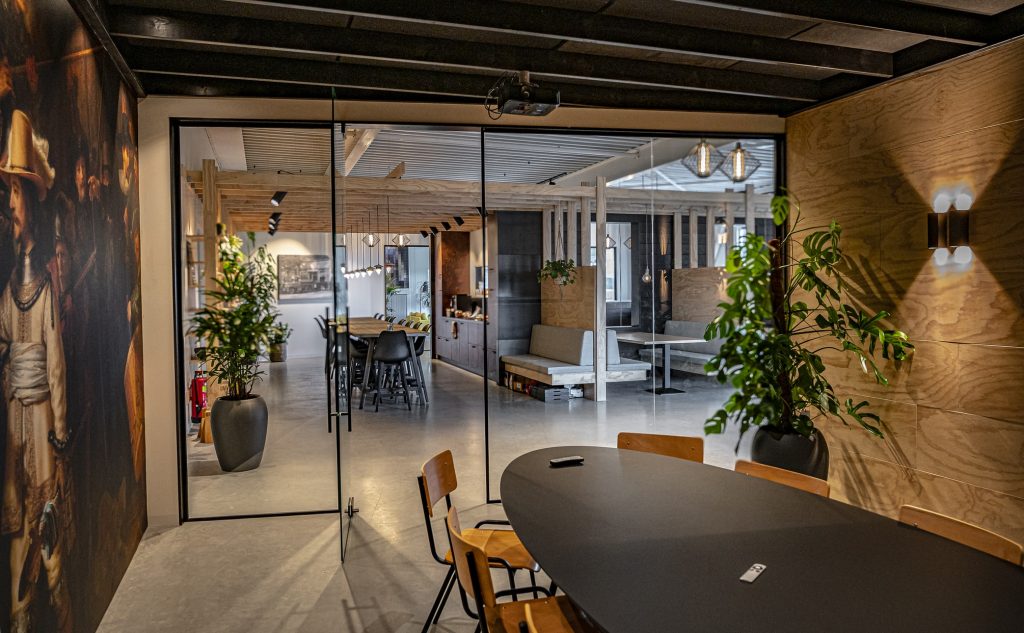
Best Lighting Solutions for Offices Without Windows
Offices without natural daylight require specialized lighting strategies to maintain employee comfort and productivity.
1. Layered Lighting Approach
A layered lighting strategy combines multiple lighting types:
• Ambient lighting (general illumination)
• Task lighting (focused workstation lighting)
• Accent lighting (visual depth and balance)
Layering helps prevent flat, overly bright environments and creates a more comfortable visual experience.
2. Tunable White Lighting
Tunable white LED systems allow users to adjust color temperature throughout the day.
Benefits include:
• Mimicking natural daylight cycles
• Supporting healthy circadian rhythms
• Improving alertness and focus
• Reducing fatigue during long working hours
This approach is especially beneficial for offices with limited or no natural light exposure.
Frequently Asked Questions (FAQ)
Does office lighting affect productivity?
Yes. Studies show that poor lighting increases fatigue and reduces concentration, while well-designed lighting improves focus, visual comfort, and overall workplace efficiency.
What is the ideal brightness level for office lighting?
Most offices require 300–500 lux for general tasks, while detailed work such as drafting or design may require 500–750 lux.
Is LED lighting better for office environments?
Yes. LED lighting systems are more energy-efficient, longer-lasting, and provide greater control over brightness and color temperature compared to traditional lighting technologies.
How can sustainable lighting reduce operating costs?
Energy-efficient lighting systems such as LEDs reduce electricity consumption and require less frequent replacement, lowering long-term operating and maintenance costs.
Conclusion: Why Sustainable Office Lighting Matters
Sustainable office lighting is not merely a design choice, it is a strategic investment in workplace productivity and employee well-being.
By optimizing:
• Energy efficiency
• Brightness levels
• Color temperature
• Lighting placement
• Natural light integration
Businesses can create work environments that support employee performance, comfort, and long-term sustainability.
Investing in intelligent lighting design leads to measurable improvements in productivity, energy savings, and workplace satisfaction.
___________________________
Lighting Solution
Year:
2023
Project Location:
TTDI, KL
LED Lights:
EGT LED Panel Light 36W, 595mmx595mm, 4000K;
EGT LED Panel Light 36W, 1195mmx295mm, 4000K