
Solar Lighting Malaysia: Complete Guide to Solar LED Lighting Systems
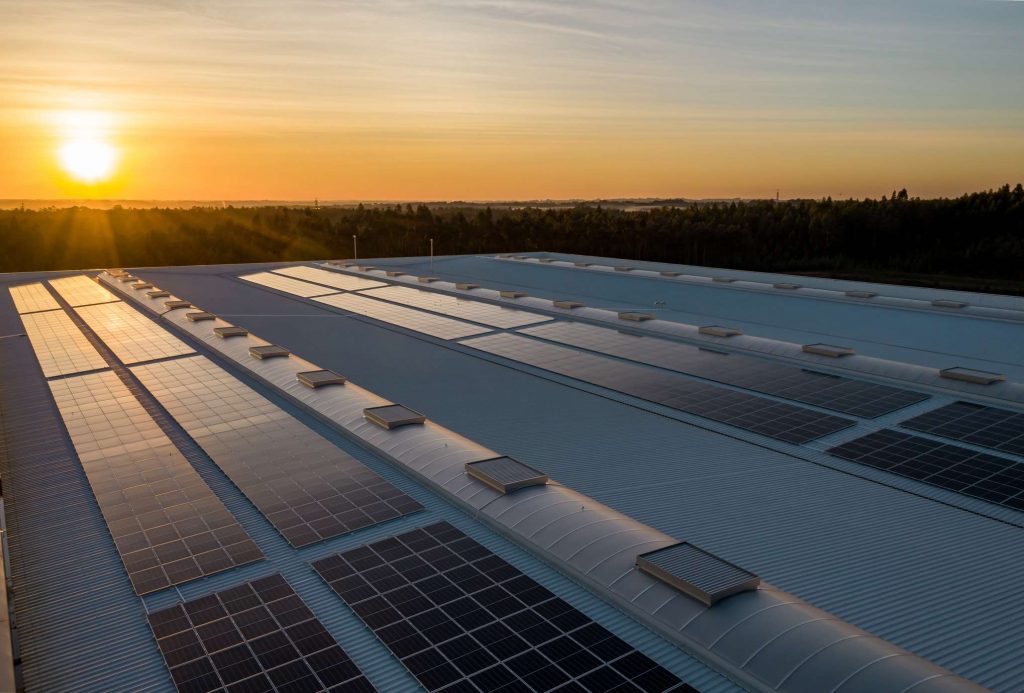
Solar lighting in Malaysia is a practical off-grid lighting solution for roads, car parks, parks, walkways, resorts, recreational areas, construction sites and other outdoor locations where connecting to the electrical grid may be difficult, expensive or impractical.
A typical solar lighting system combines a solar photovoltaic (PV) panel, rechargeable battery, charge controller and LED luminaire to collect energy during the day and provide lighting at night.
For Malaysian projects, selecting the right solar lighting system requires more than comparing LED wattage. Solar availability, lighting requirements, operating hours, battery capacity, pole height, spacing, optical distribution and environmental conditions should all be considered.
Quick Answer: What Is Solar Lighting?
Solar lighting uses energy from sunlight to power a lighting system.
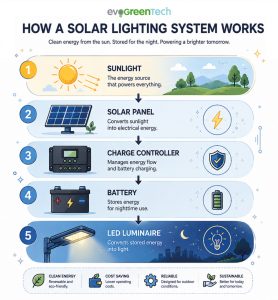
During the day, a photovoltaic panel converts sunlight into electrical energy, which is stored in a rechargeable battery. After sunset, the stored energy powers the LED luminaire.
A typical stand-alone solar lighting system works as:
Sunlight → Solar Panel → Charge Controller → Battery → LED Luminaire
Unlike conventional grid-connected lighting, stand-alone solar lighting normally does not require a grid electricity connection or underground electrical cabling to operate the light.
This makes solar lighting particularly useful for roads, parks, pathways, car parks, rural areas and other locations where grid infrastructure is unavailable or costly to install.
Key Takeaways
- Solar lighting converts sunlight into electrical energy for lighting.
- A typical system consists of a solar panel, battery, controller and LED luminaire.
- Stand-alone solar lighting can operate independently from the electrical grid.
- Solar lighting is suitable for roads, parks, pathways, car parks, playgrounds, resorts and rural areas.
- Malaysia’s solar conditions make solar lighting suitable for many outdoor applications, but cloud cover and rainfall should be considered during system design.
- Solar lighting should be selected based on lighting performance and system requirements, not LED wattage alone.
- Pole height, spacing, battery capacity, solar panel sizing and optical distribution all affect performance.
How Does a Solar Lighting System Work?
A solar lighting system has four main components that work together to generate, store and deliver energy.
1. Solar Panel
The photovoltaic panel captures sunlight and converts it into electrical energy.
Energy generation can be affected by:
- Solar radiation
- Panel capacity
- Panel efficiency
- Shading
- Installation orientation
- Weather conditions
Malaysia receives substantial solar radiation throughout the year, although solar conditions vary by location and season.
2. Charge Controller
The charge controller manages energy generated by the solar panel and controls battery charging.
Depending on the system, it may also manage:
- Automatic dusk-to-dawn operation
- Dimming
- Motion sensing
- Lighting schedules
- Battery protection
- Different lighting modes
3. Rechargeable Battery
The battery stores energy generated during the day so the LED luminaire can operate after sunset.
Battery selection should consider:
- Capacity
- Battery chemistry
- Operating temperature
- Charging conditions
- Expected lifecycle
- Required autonomy
- Nightly energy consumption
4. LED Luminaire
The LED luminaire converts stored electrical energy into light.
Its performance depends on more than wattage. Important factors include:
- Lumen output
- LED efficacy
- Beam distribution
- Colour temperature
- Colour rendering
- Optical efficiency
- Thermal management
- IP rating
For roads and area lighting, optical distribution is particularly important because the objective is to distribute light effectively across the required area rather than simply produce the highest brightness.
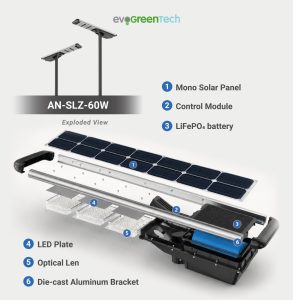
Solar Street Light: Main Components
A solar street light combines the energy-generation system, storage system and LED lighting system into a complete outdoor lighting solution.
Types of Solar Lighting Systems
Stand-Alone Solar Lighting
A stand-alone system generates and stores its own energy and operates independently from the electrical grid.
Typical applications include roads, rural areas, walkways, parks, car parks, playgrounds, resorts and other remote facilities.
Hybrid Solar Lighting
Hybrid systems combine solar energy with another electrical source, such as the conventional grid.
They may be considered when grid electricity is available or when continuous reliability and additional energy sources are required.
Solar-Wind Hybrid Lighting
Solar-wind hybrid systems combine photovoltaic panels with a small wind turbine and battery storage.
They may be suitable for selected remote locations where both solar and wind resources can contribute to energy generation.
Solar Lighting Applications in Malaysia
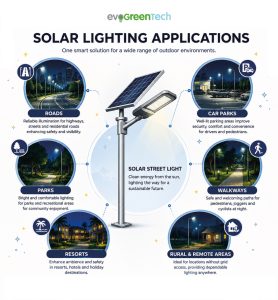
Solar lighting can be used across a wide range of outdoor environments.
Solar Street Lighting
Suitable applications include:
- Roads
- Rural roads
- Residential roads
- Internal roads
- Access roads
- Pathways
EvoGreenTech’s solar street-light range includes models designed for applications such as highways, roadways, theme parks, playgrounds and rural areas.
[Browse Our Solar Street Lights]
Car Parks
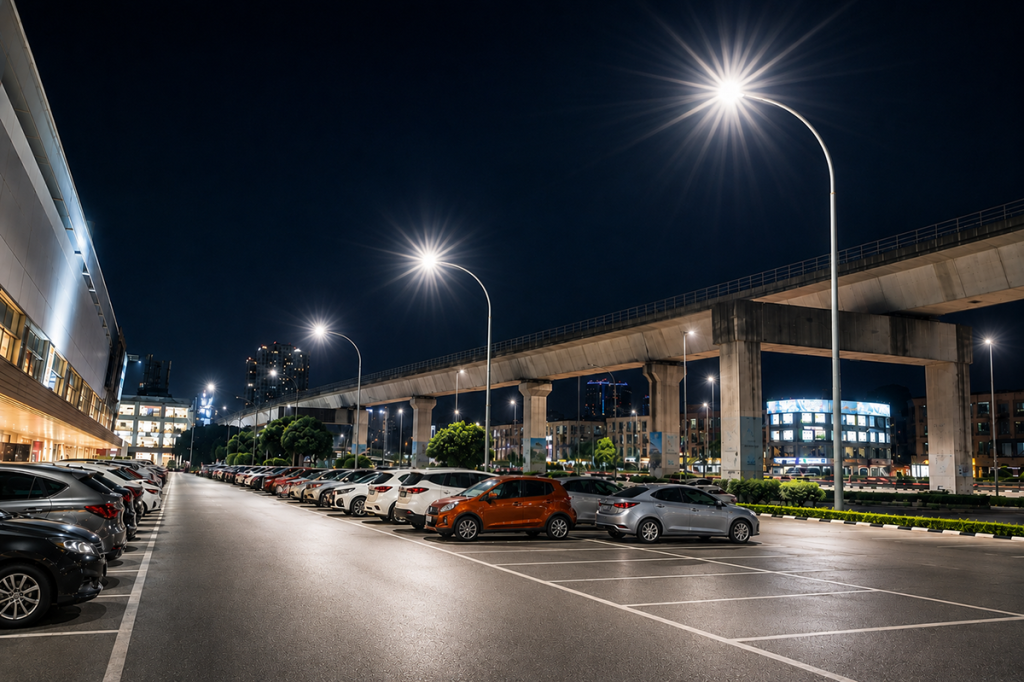
Solar lighting can be suitable for car parks where underground electrical cabling is difficult to install or where an independent lighting system is preferred.
Important considerations include:
- Required illumination
- Pole height
- Pole spacing
- Parking layout
- Light distribution
- Operating hours
Parks & Recreational Areas
Applications include:
- Public parks
- Walking paths
- Jogging tracks
- Playgrounds
- Gardens
- Recreational areas
Lighting should balance visibility and safety with glare control and the surrounding environment.
Resorts & Hospitality Areas
Solar lighting can be used for:
- Resort pathways
- Gardens
- Outdoor facilities
- Pedestrian routes
- Landscape areas
- Recreational spaces
For hospitality environments, colour temperature, glare, visual comfort and aesthetics may be as important as energy performance.
Rural & Remote Areas
Solar lighting is particularly useful where conventional grid infrastructure is unavailable or expensive to install.
Why Is Solar Lighting Suitable for Malaysia?
Malaysia’s location near the equator provides substantial solar energy potential throughout the year.
The Malaysian Meteorological Department states that Malaysia receives approximately six hours of sunshine per day on average, although sunshine duration varies by location and season.
However, solar lighting systems must also account for Malaysia’s tropical conditions, including:
- Heavy rainfall
- Cloud cover
- High humidity
- High temperatures
- Dust and dirt
- Coastal exposure
- Tropical weather
Cloudy and rainy periods can reduce solar energy generation.
Therefore, a solar lighting system should be properly sized according to the local site, required operating hours, battery capacity and solar panel performance.
Site-specific assessment is more reliable than assuming identical solar conditions across Malaysia.
How to Choose the Right Solar Lighting System
Choosing a solar light should not begin with:
“How many watts do I need?”
Instead, start with the lighting requirement and application.
| Factor | What to Consider |
|---|---|
| Lighting level | Required lux and uniformity |
| Operating hours | Evening, scheduled or dusk-to-dawn operation |
| LED power | Appropriate output for the application |
| Battery | Capacity, chemistry and required autonomy |
| Solar panel | Solar generation and charging requirements |
| Optics | Beam angle and light distribution |
| Pole layout | Height, spacing and road/area dimensions |
| Environment | IP rating, temperature, corrosion and weather exposure |
Lighting Level
Lighting requirements should be considered in terms of lux, rather than wattage alone.
A pathway, car park and roadway may require different lighting performance.
Operating Hours
Determine how long the light needs to operate each night.
Examples include:
- Fixed operating hours
- Dusk-to-dawn
- Scheduled dimming
- Motion-activated operation
Longer operating hours generally increase energy-storage requirements.
Battery Capacity
Battery capacity determines how much stored energy is available after sunset.
Battery selection should consider nightly energy consumption, operating hours, temperature, battery chemistry and required autonomy.
Solar Panel Capacity
The solar panel needs to generate enough energy to recharge the battery while supporting the lighting system.
Panel sizing depends on:
- Solar radiation
- Sunshine duration
- Panel efficiency
- System losses
- Battery requirements
- Lighting energy consumption
Pole Height & Spacing
A solar street light should be evaluated together with its installation layout.
Pole height, spacing, road width, mounting angle and optical distribution all influence lighting performance.
Two projects using the same luminaire can produce very different results if the pole height and spacing are different.
Environmental Protection
Outdoor equipment should be selected according to the environmental conditions of the site.
Consider:
- IP rating
- Corrosion resistance
- Operating temperature
- UV exposure
- Rain
- Coastal conditions
- Mechanical protection
Solar Lighting vs Conventional Grid-Connected Lighting
Both solar and grid-connected lighting can be effective depending on the project.
| Factor | Solar Lighting | Grid-Connected Lighting |
|---|---|---|
| Grid electricity | Usually not required | Required |
| Underground cabling | Often reduced or avoided | Usually required |
| Battery | Required for stand-alone systems | Normally not required |
| Solar panel | Required | Not required |
| Remote locations | Highly suitable | Depends on grid availability |
| Initial cost | Can be higher | Often lower |
| Electricity consumption | Reduced grid consumption | Ongoing |
| Installation | Useful where grid infrastructure is unavailable | May require trenching/cabling |
| Maintenance | Battery + luminaire considerations | Electrical infrastructure + luminaire |
The best option should be evaluated based on total project requirements, installation conditions and long-term operating considerations, rather than product price alone.
How Much Does Solar Lighting Cost in Malaysia?
There is no single price for solar lighting because cost depends on the system configuration and project requirements.
Factors include:
- LED power
- Solar panel capacity
- Battery capacity and technology
- Pole height
- Lighting performance
- Quantity
- Installation conditions
- Site accessibility
- Lighting design requirements
For this reason, a project-specific quotation is more meaningful than using a generic price per solar light.
To evaluate a project accurately, useful information includes:
- Project location
- Application
- Site plan
- Road or pathway dimensions
- Required lighting level
- Operating hours
- Pole height
- Pole spacing
- Quantity of lighting points
- Existing electrical infrastructure
- Environmental conditions
- Project specifications
[Request a Solar Lighting Consultation]
EvoGreenTech Solar Lighting Solutions
EvoGreenTech provides solar lighting products for outdoor applications where independent and energy-efficient lighting solutions are required.
Our solar lighting applications include:
- Highways
- Roadways
- Rural areas
- Parks
- Walkways
- Car parks
- Playgrounds
- Theme parks
- Industrial areas
- Recreational spaces
Our solar street-light range includes AN-ISSL-C and AN-SLZ series models in different configurations.
Product selection should always be based on the project’s actual lighting requirements, site conditions and system performance rather than wattage alone.
[Explore EvoGreenTech Solar Lighting Products]
[Browse Our Solar Street Lights]
Frequently Asked Questions About Solar Lighting in Malaysia
Is solar lighting suitable for Malaysia?
Yes. Malaysia receives substantial sunshine throughout the year, making solar lighting suitable for many outdoor applications. However, system performance depends on location, weather, solar exposure, battery capacity, panel sizing and operating requirements.
Do solar street lights work during cloudy or rainy weather?
Yes, they can continue operating using energy stored in the battery. However, prolonged periods of reduced sunlight can affect battery charging, so the system should be properly designed for the local climate and required autonomy.
How many hours can a solar street light operate?
Operating time depends on LED power, battery capacity, solar panel capacity, lighting mode, operating schedule and weather conditions.
Do solar street lights need TNB electricity?
A stand-alone solar street light normally does not require a conventional grid electricity connection. Hybrid systems may use both solar and grid electricity depending on their configuration.
Do solar street lights need underground cables?
Stand-alone systems can generally avoid the electrical cabling required for conventional grid-connected lighting, making them useful for remote areas and new sites where trenching may be difficult or costly.
How long does a solar lighting battery last?
Battery lifespan depends on battery chemistry, quality, operating temperature, charge/discharge cycles, system design and maintenance conditions.
How do I choose the right solar street light?
Start with the application and required lighting performance. Consider lux level, operating hours, battery capacity, solar panel sizing, pole height, spacing, optical distribution and environmental conditions before selecting the appropriate system.
Is Solar Lighting Right for Your Project?
Solar lighting can be an effective solution for projects that require independent lighting or where conventional grid connection is difficult or costly.
The right system should consider:
Solar availability + lighting requirements + battery capacity + LED performance + optical distribution + pole layout + environmental conditions
For projects in Malaysia, local weather and solar conditions should also be considered when determining the appropriate system configuration.
Whether you are planning solar street lighting, car park lighting, pathway lighting, park lighting, resort lighting or rural road lighting, EvoGreenTech can help you evaluate suitable solar lighting options based on your project requirements.
Looking for the Right Solar Lighting Solution?
Talk to EvoGreenTech about your project.